Introduction
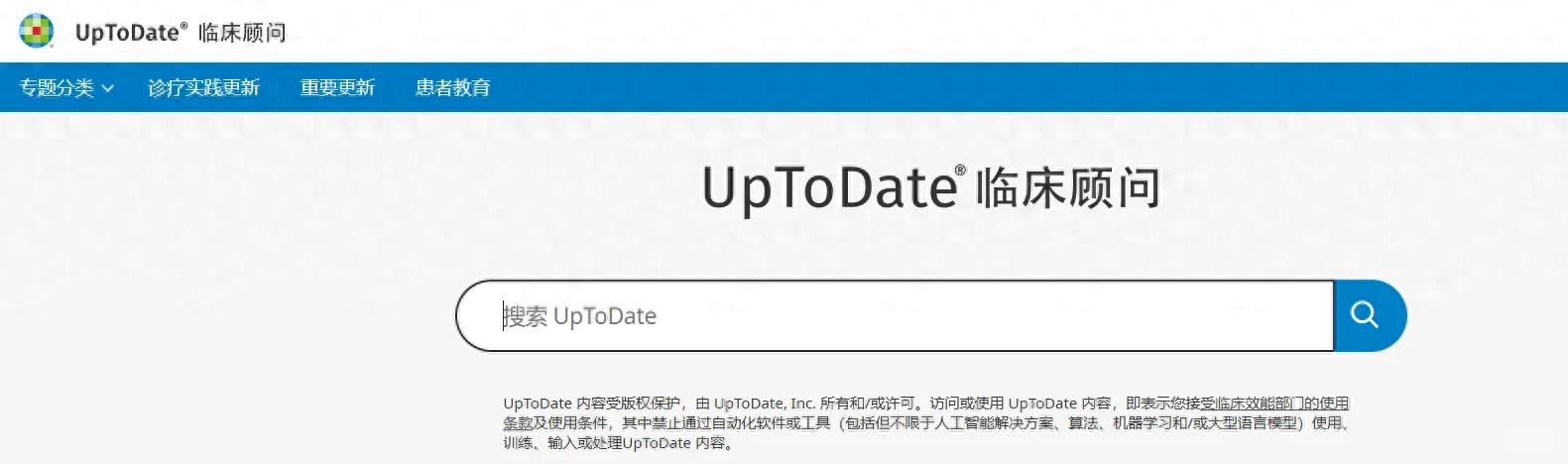
At 2 AM, your phone rings. An emergency patient with fever and rash has been admitted, and antibiotics have shown no effect after three days. You open UpToDate, paying $550 annually, but after flipping through several pages, you still can’t find a similar case. You frown, thinking how helpful it would be to have an informed assistant by your side to sift through literature and provide suggestions.
Now, that assistant has arrived.
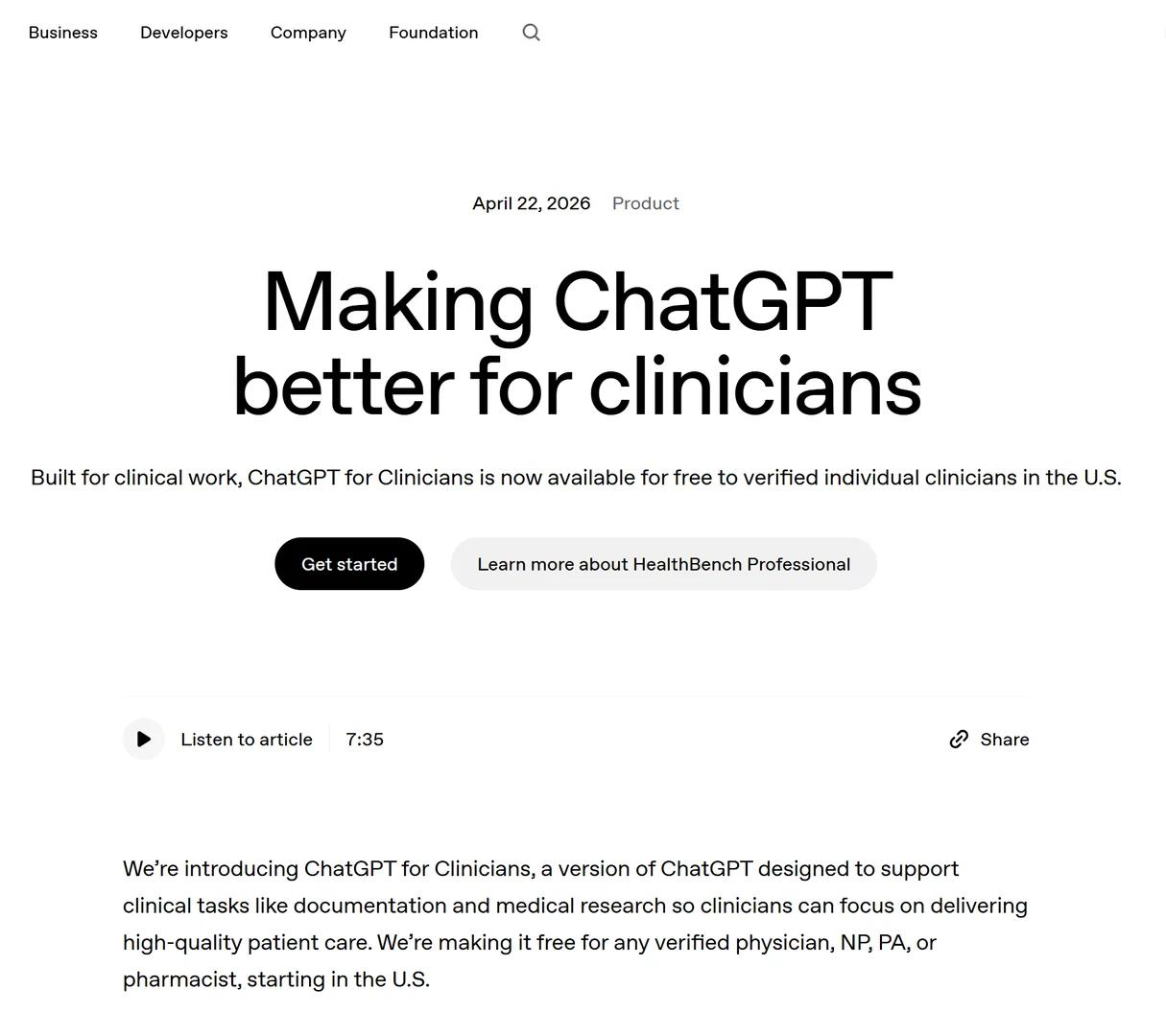
Last week, OpenAI launched a product specifically designed for clinical doctors—ChatGPT Clinical Professional Version. It verifies physician identities and is entirely free, requiring no hospital-wide deployment; you can use it independently.
The most impressive aspect is its accuracy. Before the launch, OpenAI had physician consultants test nearly 7,000 conversations in daily work, covering patient care, medical record writing, and literature searches. Doctors evaluated that 99.6% of the responses were safe and accurate. The external claim of “close to 100%” is not exaggerated. The chance of an error occurring is lower than mistyping a medication name during a shift.
How Much Time Can It Save?
Don’t think this is just a rebranded version of the general ChatGPT. It has been specifically optimized for clinical scenarios, with five key features addressing pain points:
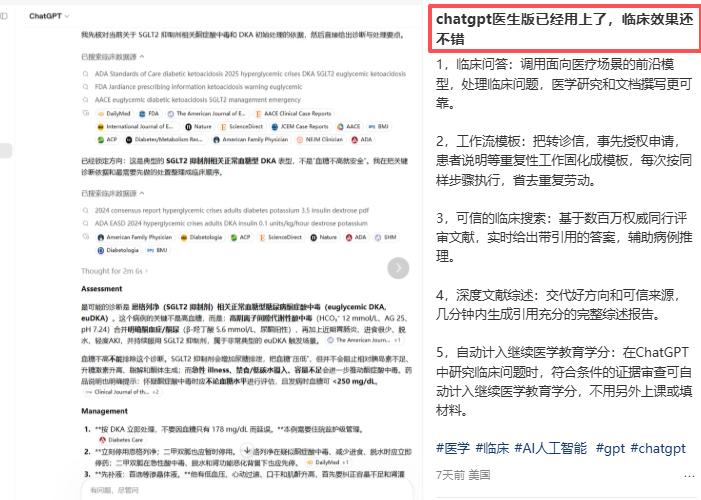
1. Clinical Q&A: Ask anything, and it provides answers backed by reliable medical evidence.
2. Workflow Templates: Referral letters, prior authorization requests, patient notices… these repetitive tasks can be templated with one click, saving you at least an hour each day.
3. Credible Search: Based on millions of authoritative documents, answers come with citations, eliminating the risk of misinformation.
4. In-depth Reviews: Provide a few keywords, and in minutes, it generates a literature review complete with citations.
5. Automatic Credit Calculation: Time spent searching literature and analyzing cases is automatically converted into continuing medical education credits—no more need to run around for courses.
Regarding privacy, OpenAI promises that conversations will not be used for training. However, the disclaimer is clear: if the AI assists you in writing and something goes wrong, you are still responsible.
Is Free Really Free?
Some say, “The free stuff is the most expensive.”
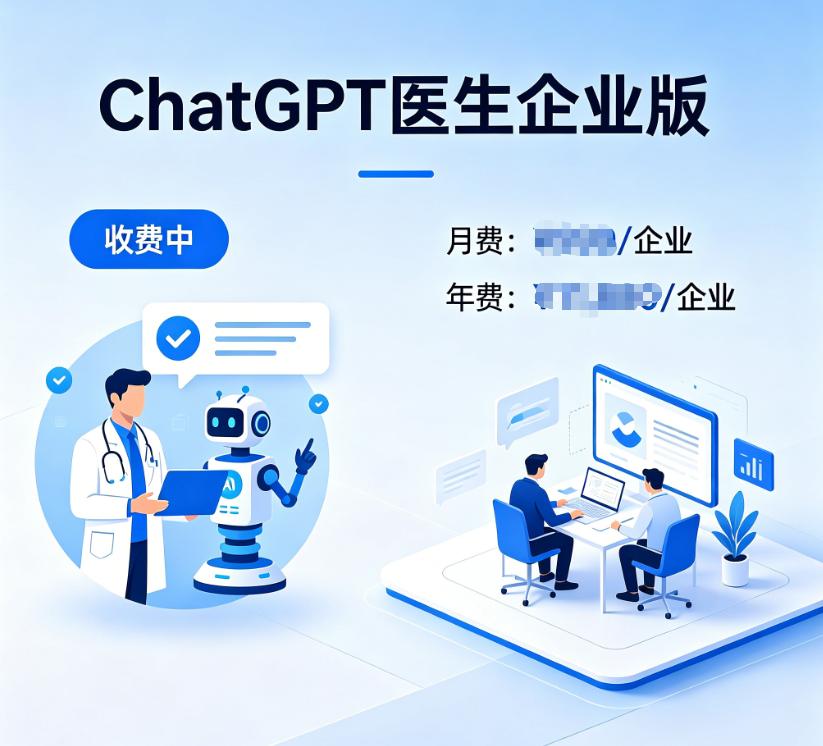
Indeed, OpenAI is not a charity. It allows doctors to use it for free at first, and once they become accustomed to it and reliant on it, it will market the enterprise version to hospitals—the premium version that can connect with Apple Health, automatically interpret lab results, and integrate into electronic medical records. Major hospitals in the U.S., such as AdventHealth and HCA, have already adopted the enterprise version.
But OpenAI is not alone in this battle. Another free competitor is OpenEvidence, which operates differently—earning money through pharmaceutical company advertisements, charging $70 to $150 per thousand impressions, while doctors use it entirely for free. Moreover, in March this year, it integrated with the Epic system at Mount Sinai Hospital, allowing doctors to access AI directly within electronic medical records without switching browsers. OpenAI has not yet achieved this.
Regardless of who wins, subscription services like UpToDate, which cost over $500 annually, will undoubtedly face tougher times ahead.
Can AI Enter Departments Without the Director’s Approval?
Some doctors express skepticism: “Without the director’s approval, these systems can’t enter.” This statement has some truth, but it’s not entirely accurate.
If a hospital wants to localize deployment, integrate AI into its internal network, and use its data, it indeed requires the director’s approval. Some provincial health commissions are already working on this—setting up provincial platforms where hospitals can apply for computing tokens through medical networks. However, if you just want to use it independently to assist in writing medical records and searching literature, you can access it with a verified medical license without needing anyone’s approval.

There are also concerns: “As AI becomes stronger, will doctors lose their jobs?”
From another perspective, when Baidu first emerged, some claimed that doctors would be replaced by search engines. What happened? Which attending physician hasn’t secretly checked Baidu? AI is the new-age Baidu—a smarter tool. You won’t forget basic math because you used a calculator, but you will be slower than others if you don’t use one.
You Can Use It Now, But You Still Sign Off
Open the ChatGPT Clinical Professional Version, verify your medical credentials, and you can start using it for free immediately. Don’t wait for a meeting; your colleague in the next department has already started using it.
Finally, remember: AI can help you write medical records, search literature, and provide suggestions, but the one who signs off on the discharge summary will always be you.
Comments
Discussion is powered by Giscus (GitHub Discussions). Add
repo,repoID,category, andcategoryIDunder[params.comments.giscus]inhugo.tomlusing the values from the Giscus setup tool.